
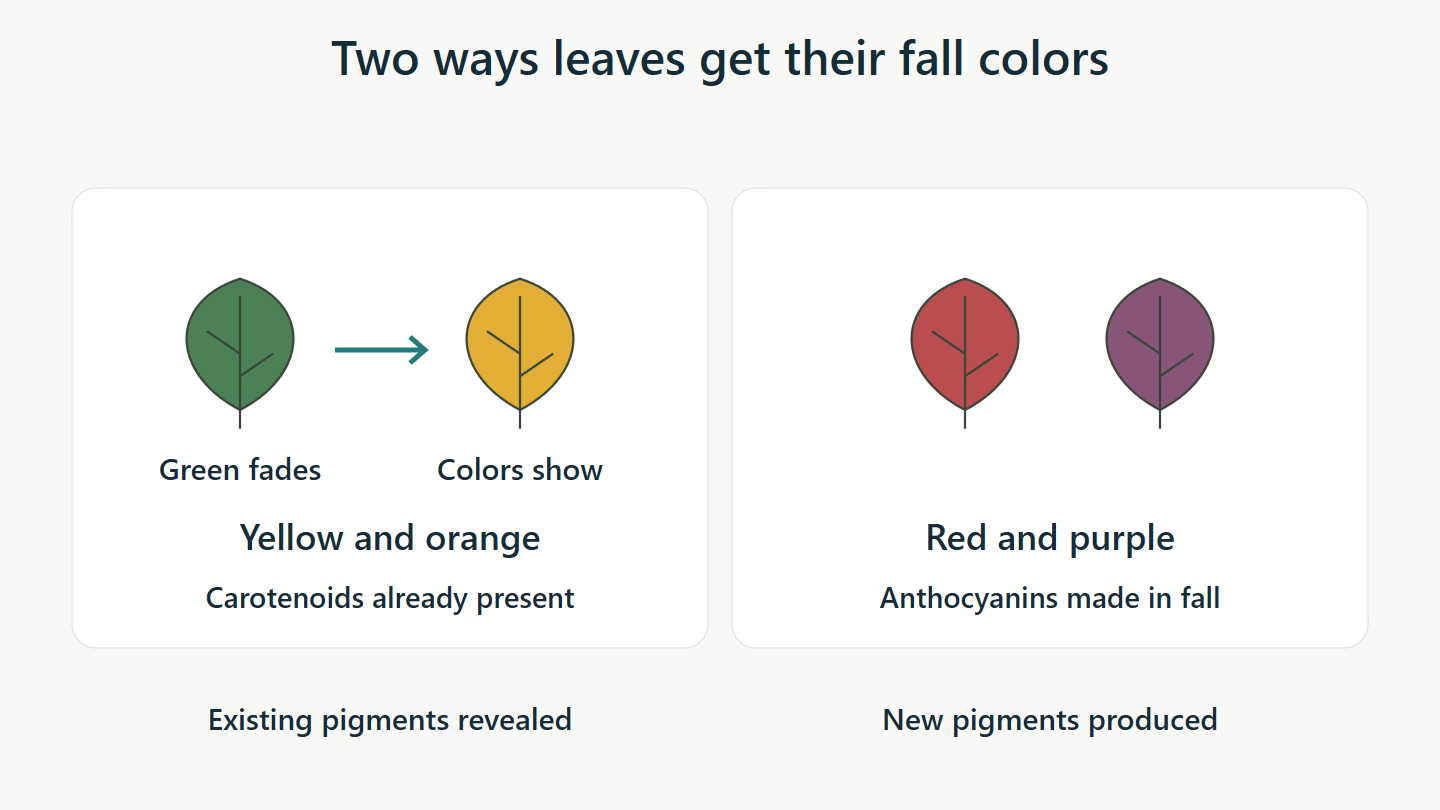
Carotenoids are already present; anthocyanins are newly produced in the leaves of many species.
Why leaves stop staying green
In temperate deciduous trees—species that shed their leaves each year—autumn color appears as the tree prepares for winter. Shortening days and dropping temperatures cue the tree to stop replenishing chlorophyll, the pigment that makes leaves green and drives photosynthesis. As remaining chlorophyll breaks down, the green fades. What appears next depends on two different processes: yellow and orange pigments that were hidden in the leaf all summer become visible, while red and purple pigments are newly produced in late summer and early fall from sugars remaining in the leaf. Different trees turn different colors because species vary in which pigments they carry or make, and because genetics, sunlight, and autumn weather shift the balance.
During spring and summer, deciduous trees continually produce chlorophyll to capture sunlight and make carbohydrates. As days shorten and nights grow longer and cooler, trees begin pulling sugars and other nutrients out of their leaves and storing them in more cold-hardy woody tissues. At the same time, the veins connecting each leaf to the stem gradually close off, restricting the flow of water and resources into the leaf. Without continual replacement, chlorophyll production halts and sunlight breaks down the green pigment that remains.
Yellow and orange vs. red and purple pigments
Not all autumn colors form the same way. Yellows and oranges are uncovered, whereas reds and purples have to be manufactured as the season changes.
Yellow and orange shades come from carotenoids, a group of pigments present in leaves throughout the growing season. During summer, abundant green chlorophyll masks them. Once chlorophyll disappears in autumn, those existing carotenoids show through.
Red and purple shades come from anthocyanins. Unlike carotenoids, anthocyanins are not sitting in the leaf all summer waiting to be revealed. As leaf veins narrow in late summer and early fall, they restrict not only incoming water but also the exit of carbohydrates out of the leaf. Many tree and shrub species use those retained sugars to manufacture anthocyanins.
A third group of compounds, tannins, contributes to the subdued brown tones characteristic of oak leaves in autumn.
Why different trees—and even different branches—turn different colors
A forest does not turn a single uniform color because tree species differ in how much carotenoid or anthocyanin pigment they produce. Some species generate abundant pigments and put on vivid yellow, orange, or red displays, while others produce much smaller amounts and turn muted yellow-brown or brown. In oaks, tannins add to that brown coloration.
Even within a single species or a single tree, color can vary noticeably. Sugar maples, for example, can turn yellow, orange, or red depending on genetics, fall weather, and how much sun each part of the canopy receives. Leaves in full shade may stay yellow while sun-exposed leaves on the same tree turn red.
How weather shapes the autumn display
Because anthocyanin production depends on sugars trapped inside the leaf, autumn weather strongly affects how much red develops in species capable of making it. Warm, sunny days encourage leaves to produce more sugar through photosynthesis, while cool nights slow the transport of those sugars out through narrowing leaf veins. With more sugar held in the leaf, trees produce extra anthocyanins and deeper red color. By contrast, cloudy autumn days reduce sugar production, and warm nights allow more sugar to drain into woody tissues, leaving less material for anthocyanins and resulting in more muted colors.
Colder or harsher weather does not automatically improve fall foliage, however. An early hard freeze can kill leaves before their color fully develops, cutting the process short. Stress from prolonged dry weather earlier in the growing season can cause leaves to dry out, turn brown, and drop prematurely, while heavy rain and high winds can strip colorful leaves from branches and shorten how long the display lasts.