
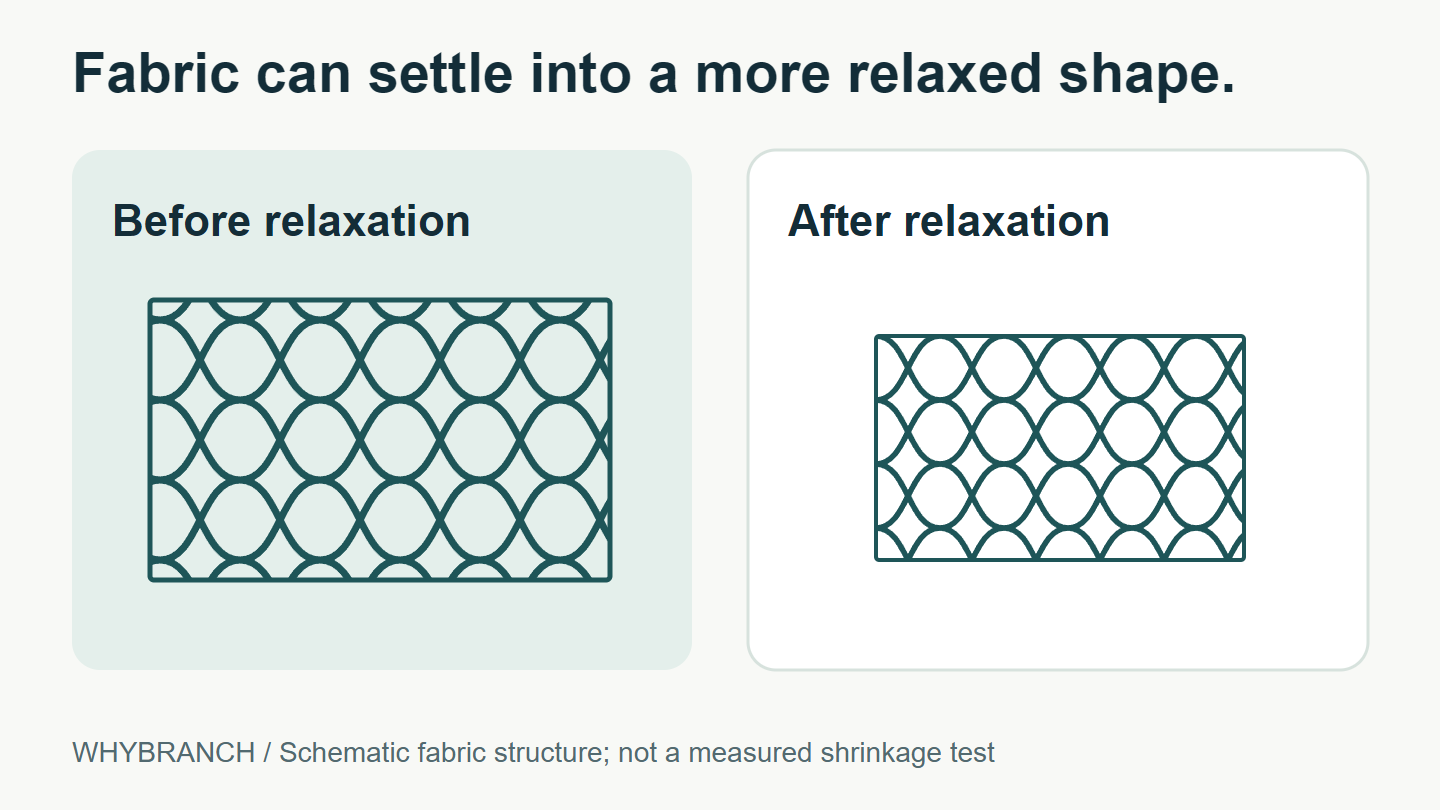
Cotton clothes can shrink when washing and drying let the fabric settle into a more relaxed shape. Manufacturing can leave tension in the material; water and movement help release it. The result depends on how the fabric was made and finished, as well as how you wash and dry it.
That’s why two shirts labeled “100% cotton” can change size differently. The fiber label identifies the material, but it doesn’t describe the yarn arrangement, the finishing treatment, or how much shrinkage remains possible.
The fabric’s structure can change
Cloth is a structure made from yarn. In a knitted T-shirt, yarn forms loops; in a woven shirt, yarns interlace. Changes in the way those yarns sit together can change the garment’s dimensions.
CottonWorks distinguishes construction and processing shrinkage. The fabric’s arrangement creates some of its potential to change, while stretching and other forces during processing can affect the size delivered to the customer. Laundering may reveal a difference between that delivered size and a more relaxed state.
Tumbling matters, not just temperature
A tumble dryer repeatedly moves the wet fabric as it dries. That mechanical action helps the yarn structure rearrange. A cotton item can therefore shrink even when a very hot wash wasn’t part of the process.
In its technical discussion of cotton shrinkage, CottonWorks emphasizes tumbling and the fabric’s change as it loses water. Heat affects drying time; temperature alone doesn’t explain how far a cotton fabric can relax. Selecting low heat still leaves the dryer’s mechanical action in place.
This doesn’t make every drying setting suitable for every cotton garment. A finished item can also contain dyes, finishes, elastic, trim, or other fibers. Its care label applies to the whole item.
What “preshrunk” tells you
A manufacturer can relax or compact fabric before it reaches you, reducing the change left for later laundering. Preshrunk cotton has already undergone a shrink-control process, but the word isn’t a promise that the finished garment will never change size.
The American Cleaning Institute notes that some residual shrinkage may remain even in preshrunk fabric. Fabric construction and finishing help explain why a well-worn shirt and a new shirt can respond differently to the same laundry routine.
Follow the garment’s care label
Start with the garment’s washing and drying instructions. A cold wash by itself doesn’t guarantee that later tumble drying will leave the dimensions unchanged. If the label calls for line or flat drying, a low-temperature tumble cycle is still a different method.
To limit overdrying, the American Cleaning Institute recommends reducing drying time and removing cotton knits while they are slightly damp, then reshaping and laying them flat to finish. Follow that approach only where it fits the item’s care instructions. It’s a care choice, not a guarantee that an already shrunken shirt will return to its original size.
Sources and illustration
This explanation draws on CottonWorks’ textile guidance and the American Cleaning Institute’s garment-care advice. The original Whybranch illustration shows fabric relaxation conceptually; it is not a photograph or a measured shrinkage test.